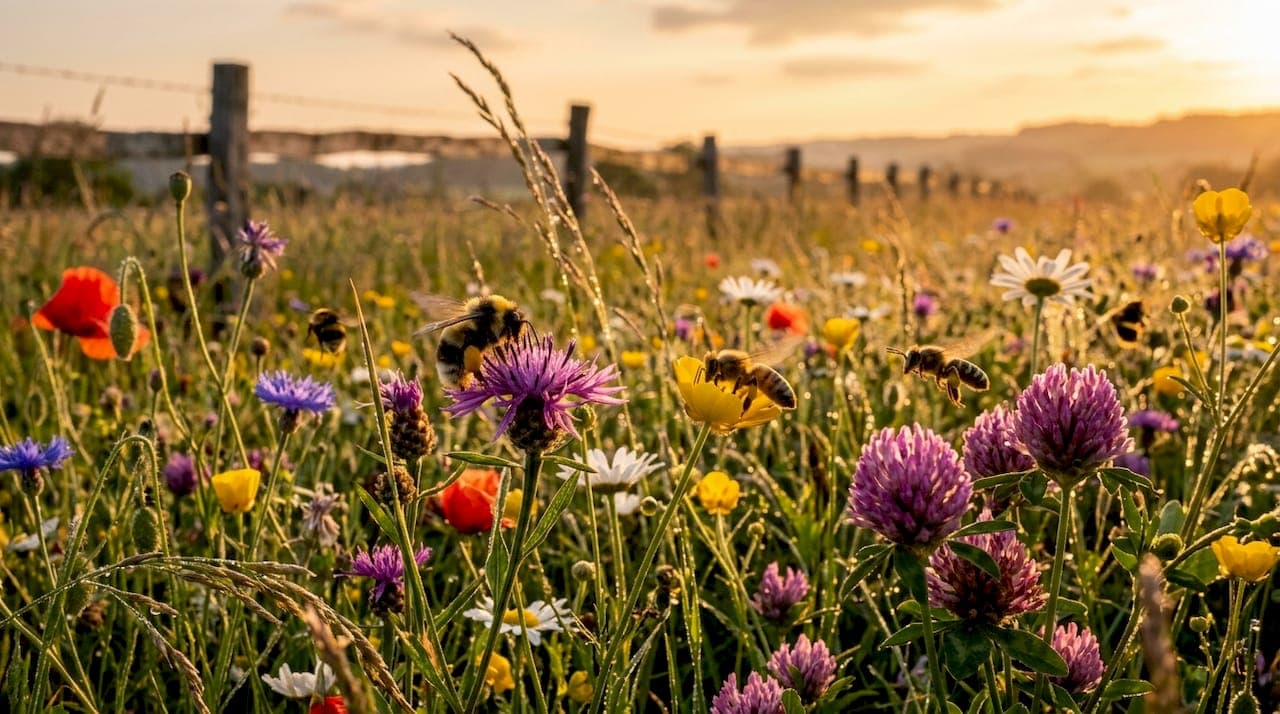
Biodiversity is defined as the variety of life forms, habitats, and genetic material that together sustain functioning ecosystems. It is the single most important factor in bee survival because it provides the diverse flowering plants, nesting sites, and nutritional resources that bees cannot source from monocultures alone. Insect pollinators contribute 44% of farmers' income globally and supply over 20% of humans' intake of essential nutrients including vitamin A, folate, and vitamin E. That figure alone shows how tightly bee health and human food security are bound together. Understanding why biodiversity supports bee survival is not an academic exercise. It is a practical conservation priority with measurable consequences.
Why does biodiversity directly support bee survival?
Biodiversity supports bee survival by supplying the continuous, varied diet and physical habitat that bees need across every season. A single crop field in full bloom offers a brief feast followed by a nutritional desert. A diverse landscape, by contrast, provides overlapping flowering cycles from early spring through late autumn, giving bees a reliable food source without dangerous gaps.
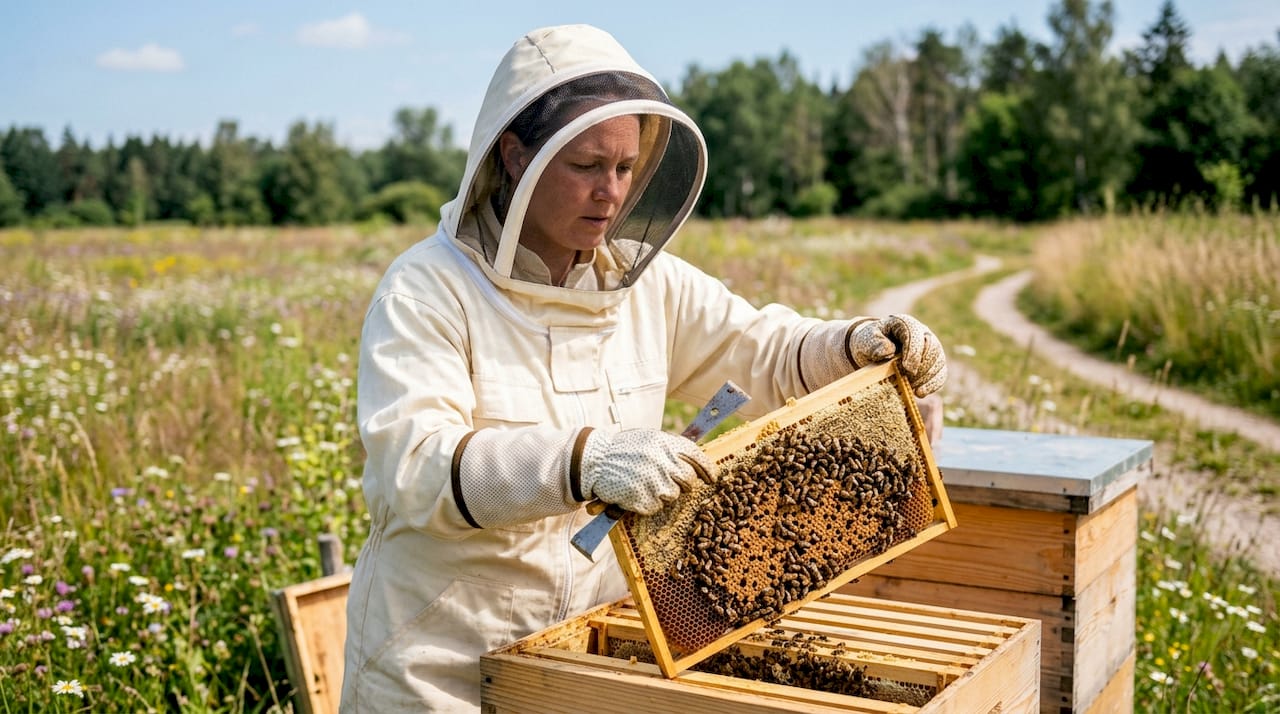
The dietary requirements of bees are more complex than most people realise. Bees need pollen from multiple plant species to obtain a full spectrum of amino acids, lipids, vitamins, and micronutrients. Diverse landscapes attract a wider variety of pollinators precisely because varied pollen and nectar resources meet those complex needs. A landscape dominated by one or two species simply cannot do that.
Habitat structure matters as much as floral variety. Many solitary bee species nest in bare soil, hollow stems, or south-facing banks. When tidy lawns and intensive agriculture remove these features, entire bee communities disappear regardless of how many flowers are nearby.
Key ways biodiversity supports bee survival:
- Continuous nectar and pollen flow: Native wildflowers with staggered bloom times prevent nutritional gaps between seasons.
- Nesting diversity: Bare soil patches, dead wood, and uncut hedgerows provide nesting sites for ground-nesting and cavity-nesting species.
- Colony resilience: Floral variety strengthens immune function and reduces vulnerability to pathogens and parasites.
- Genetic buffering: Increasing species and genetic biodiversity buffers ecosystems against climate change, invasive species, and disease outbreaks. That buffer directly protects bee populations under environmental stress.
Pro Tip: Plant in guilds rather than single species. Combine early bloomers like hazel and willow with mid-season plants like borage and phacelia, and late-season plants like ivy and Michaelmas daisy. This creates an unbroken forage calendar that mirrors the nutritional variety bees evolved to exploit.
What evidence shows a mutual dependency between bees and biodiversity?
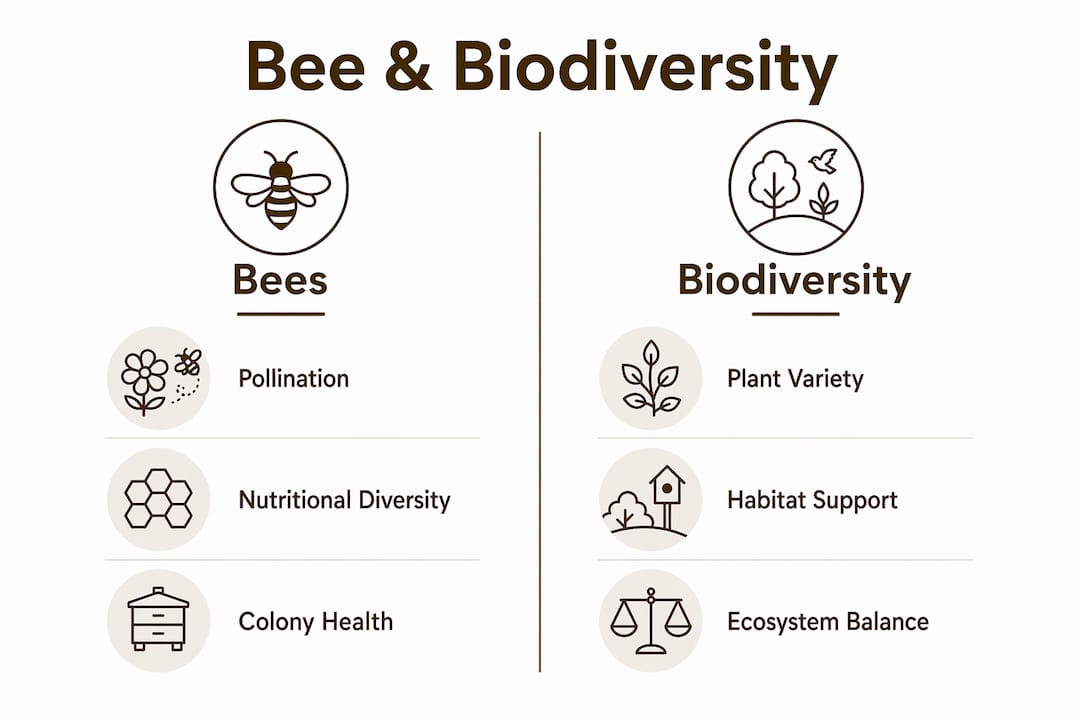
The relationship between bees and biodiversity is not one-directional. Bees sustain plant diversity through pollination, and plant diversity sustains bees through food and habitat. Remove either side and the other collapses.
A 2026 study demonstrated this feedback loop with striking clarity. Protecting wildflowers from pollinators caused a 50% drop in viable seed production and a 27% decline in plant species diversity. That is not a marginal effect. It shows that without bees, plant communities shrink, and as plant communities shrink, bees lose the resources they need to survive. Ecologists call this the plant-pollinator extinction vortex.
Ecosystem restoration studies reinforce the same point. When degraded habitats are replanted with native species, pollinator populations recover. When pollinators return, seed dispersal and plant recruitment accelerate. The two processes are inseparable.
"The link between pollinators and diverse landscapes is a two-way street. Diverse landscapes support pollinators, and pollinators in turn maintain the plant diversity that makes those landscapes function." Phys.org, april 2026
The table below summarises the core evidence for mutual dependency:
| Mechanism | Effect on bees | Effect on plant diversity |
|---|---|---|
| Pollinator exclusion | Reduces foraging competition | 27% decline in plant species |
| Seed production loss | Shrinks future forage availability | 50% drop in viable seeds |
| Habitat restoration | Increases colony density and species richness | Accelerates plant recruitment |
| Extinction vortex | Reduces colony numbers and genetic diversity | Reduces plant species over time |
The practical implication is clear. Conservation efforts that focus only on bees, without addressing plant diversity, will fail. Equally, rewilding projects that ignore pollinator health will stall. Both must be managed together.
Why is nutritional diversity crucial for bee health and colony resilience?
Nutritional diversity from pollen is the foundation of colony resilience. Bees fed on monoculture pollen show measurably weaker immune responses, lower brood survival rates, and greater susceptibility to parasites compared to bees foraging across diverse floral sources.
Pollen nutritional diversity strengthens honeybee colonies against Varroa destructor and supports physiological health through a balanced mix of amino acids, lipids, vitamins, and micronutrients. Varroa destructor is the most destructive parasite in managed beekeeping worldwide. A colony with strong nutritional status can suppress mite reproduction more effectively than a nutritionally depleted one.
There is, however, a genuine tradeoff that beekeepers must understand. Sites dominated by high-nectar-producing species yield more honey but may be nutritionally inferior for bee health. A field of oilseed rape produces abundant honey but limited pollen diversity. Beekeepers who chase maximum honey yields by placing hives in monoculture landscapes may be undermining the long-term health of their colonies.
What nutritional diversity provides for bees:
- Amino acids: Essential for brood development, gland function, and protein synthesis in worker bees.
- Lipids: Support membrane integrity and fat body development, which governs winter survival.
- Vitamins and micronutrients: Regulate immune function and detoxification pathways.
- Antioxidants: Found in diverse pollens, these reduce oxidative stress caused by pesticide exposure.
Pro Tip: If your apiary sits near a monoculture crop, position at least one hive within flight range of a wildflower margin, hedgerow, or woodland edge. Bees will blend pollen sources and self-correct their nutritional intake when given the choice.
How do habitat management and landscape diversity influence bee populations?
Habitat management is the practical expression of biodiversity conservation for bees. Knowing which plants matter is not enough. The landscape must be actively managed to maintain continuous bloom, nesting opportunity, and low pesticide pressure throughout the year.
Pastoral landscapes and traditional grazing
Traditional grazing is one of the most effective tools for maintaining floral diversity. Traditional pastoral grazing prevents ecological stagnation by controlling shrub overgrowth and maintaining the open, flower-rich swards that wild pollinators depend on. Without moderate disturbance, grasslands succeed towards scrub and then woodland, eliminating the low-growing flowering plants that support ground-nesting bees.
Silvopastoral systems integrating trees, shrubs, and herbaceous plants with livestock create multifunctional landscapes that enhance biodiversity and provide continuous floral resources. These systems are particularly effective because they combine canopy, shrub, and ground layers, each flowering at different times and attracting different bee species.
Urban landscapes and the ecological desert problem
Most city parks managed for human aesthetics are ecological deserts for bees. Closely mown grass, ornamental non-native plants, and sealed surfaces offer almost nothing to pollinators. Native plants with varied bloom times and accessible nesting ground are the minimum requirement for supporting urban bee populations.
Practical steps for improving habitat quality:
- Establish native wildflower margins along field edges, road verges, and garden borders to extend forage availability beyond the main crop season.
- Reduce mowing frequency in parks and verges from april through september to allow flowering plants to complete their cycles.
- Create bare soil patches in sunny, south-facing positions to support ground-nesting solitary bees, which represent the majority of Britain's bee species.
- Limit pesticide use to targeted applications outside peak foraging hours, and avoid systemic neonicotinoids in areas adjacent to known bee habitats.
- Plant hedgerows with mixed native species including hawthorn, blackthorn, and dog rose to provide both forage and nesting corridors across the landscape.
The contrast between managed and unmanaged urban spaces is stark. A garden with native perennials, a log pile, and a patch of bare earth supports more bee species than a manicured park ten times its size.
Key takeaways
Biodiversity supports bee survival by providing the varied floral resources, nesting habitats, and nutritional inputs that bees require to maintain colony health, resist disease, and sustain pollination services across seasons.
| Point | Details |
|---|---|
| Mutual dependency | Removing pollinators causes a 27% decline in plant species diversity, confirming the two-way relationship. |
| Nutritional resilience | Diverse pollen sources strengthen colonies against Varroa destructor and support immune function. |
| Habitat structure | Bare soil, dead wood, and uncut margins are as important as flowers for supporting diverse bee species. |
| Grazing and management | Traditional pastoral grazing maintains floral diversity by preventing shrub overgrowth and ecological stagnation. |
| Urban opportunity | Replacing ornamental plantings with native species transforms ecological deserts into functional pollinator habitat. |
Biodiversity and bees: a perspective from the field
I have spent years watching beekeepers make the same mistake. They invest heavily in hive equipment, varroa treatments, and queen rearing, then place their colonies in landscapes that cannot support healthy bees. The hives survive, but they never truly thrive.
The evidence is now unambiguous. Bee diversity is a strong metric for ecosystem health, and managing green spaces to support native plants and nesting sites improves urban bee biodiversity in measurable ways. That is not a soft conservation argument. It is a practical management principle.
What I find most compelling is the reciprocal nature of the relationship. Bees do not just benefit from biodiversity. They actively create it. A landscape without pollinators loses plant species within a single generation. That loss then feeds back into reduced forage, weaker colonies, and further pollinator decline. The vortex is real, and it accelerates faster than most people expect.
The good news is that the intervention points are accessible. A farmer who leaves a 3-metre wildflower margin, a council that delays mowing until october, a gardener who replaces bedding plants with native perennials: each of these actions contributes to a functioning pollinator corridor. The scale of the problem can feel paralysing, but the solutions are genuinely local and achievable.
My honest view is that public engagement matters more than any single conservation policy. People who understand why bees need diverse habitats make different choices in their gardens, on their parish councils, and in their purchasing decisions. That cumulative effect is where real change happens.
— steve
Supporting bee health starts with the right knowledge
Beekeeperscolony brings together the tools and information that beekeepers need to connect hive health with the surrounding environment.
The platform offers local forage mapping, hive tracking, pest records, and tailored weather forecasts, all designed to help beekeepers understand how landscape changes affect their colonies in real time. If you manage hives near diverse habitats or are working to improve forage in your area, Beekeeperscolony gives you the data to make informed decisions. The community forums connect you with other beekeepers who are navigating the same challenges, from varroa management in monoculture areas to siting hives near rewilding projects. Good beekeeping and good conservation are the same work.
FAQ
What is biodiversity and why does it matter for bee health?
Biodiversity is the variety of species, habitats, and genetic material within an ecosystem. For bees, it matters because diverse plant communities provide the range of pollen and nectar sources needed for complete nutrition and colony resilience.
How does a lack of biodiversity affect bee populations?
Reduced plant diversity limits the nutritional quality of bee diets, weakens immune function, and removes nesting habitats. Research shows that excluding pollinators from wildflowers causes a 27% decline in plant species diversity, which then further reduces forage for bees.
Which bee species benefit most from diverse habitats?
Solitary bee species, which make up the majority of Britain's approximately 270 bee species, benefit most from habitat diversity because they require specific nesting substrates and a wider range of pollen sources than managed honeybees.
Does floral diversity always improve honey production?
No. Sites dominated by high-nectar-producing species often yield more honey than florally diverse sites. The tradeoff is that nutritionally diverse forage produces healthier, more resilient colonies even when total honey yield is lower.
How can individuals support biodiversity for bees?
Planting native wildflowers with staggered bloom times, reducing mowing frequency, creating bare soil patches for ground-nesting bees, and avoiding systemic pesticides are the most effective individual actions for improving local pollinator habitat.