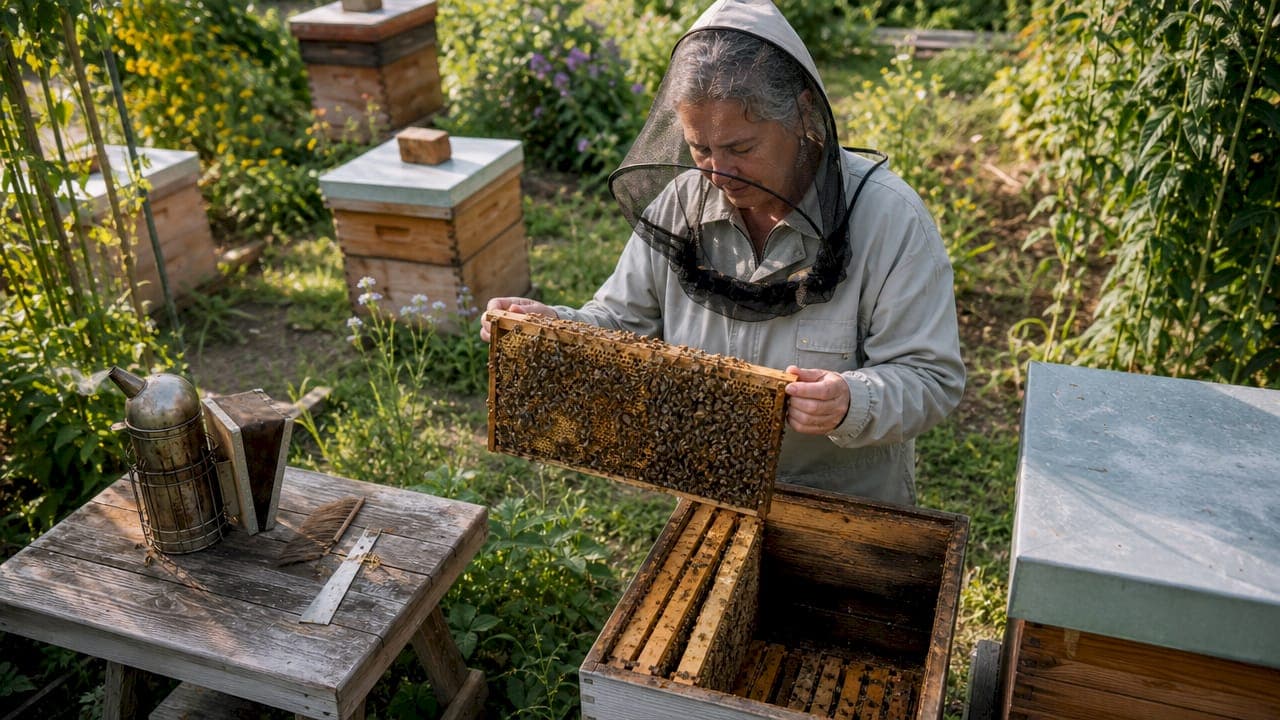
Swarming is defined as the natural process by which a honey bee colony reproduces by splitting, with roughly half the bees leaving with the old queen to find a new home. For hobby beekeepers, an unmanaged swarm means losing a large portion of your workforce, reducing honey production, and potentially alarming neighbours. The good news is that effective swarm prevention sits within reach of any hobbyist willing to inspect regularly, manage space, and understand colony behaviour. Applying the right hobby beekeeper swarm prevention tips at the right time keeps your hives stable, productive, and far less likely to surprise you on a warm spring morning.
How to manage hive space effectively to prevent swarming
Overcrowding is the single most common trigger for swarming. When bees run out of room to store honey, raise brood, or simply move around, they interpret the congestion as a signal to reproduce the colony. The fix is straightforward: add space before the bees demand it.
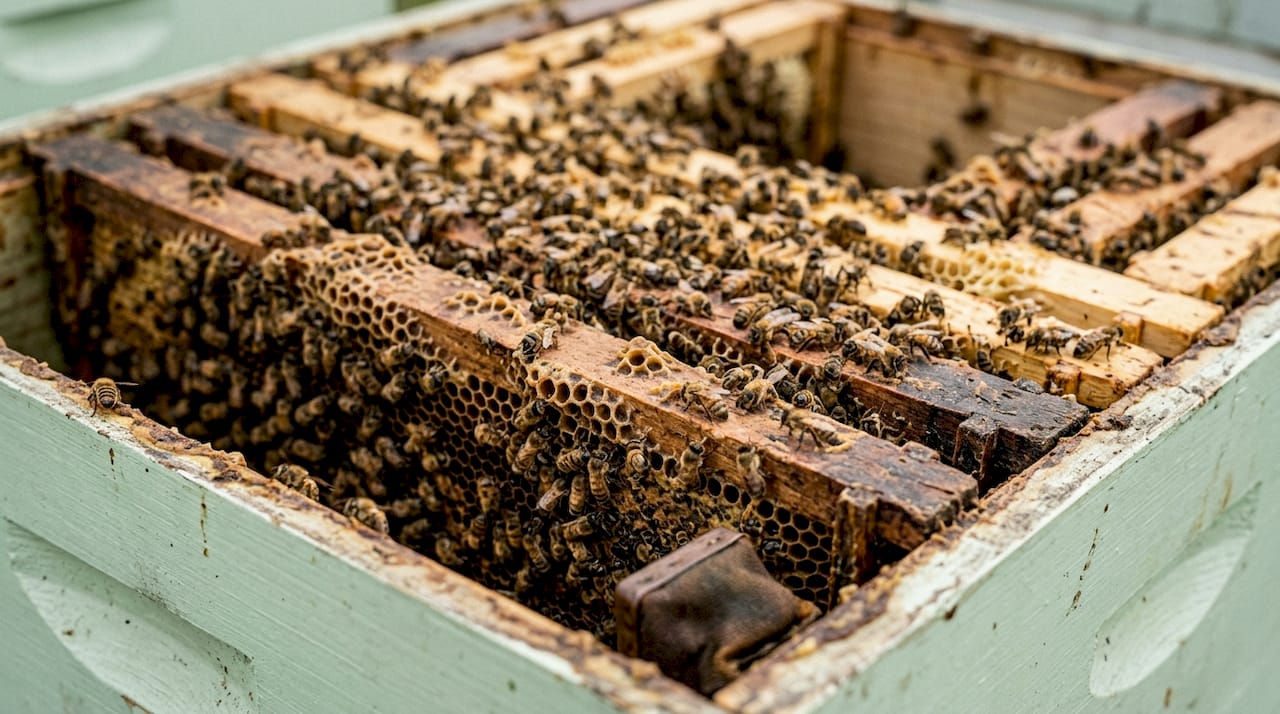
Industry guidance advises adding a super or brood box when the existing box reaches 70–80% capacity. Waiting until frames are completely full gives the colony time to begin swarm preparations that are difficult to reverse.
Strong nectar flows accelerate population growth and push colonies toward overcrowding faster than most beekeepers expect. During a good flow in late spring, a colony can fill a super in under two weeks. Check capacity at every inspection and do not assume last week's reading still holds.
Ventilation also plays a role. Hive ventilation and shade reduce stress-induced swarming triggered by excessive hive heat. A screened bottom board and a shaded position in the apiary cost nothing but make a measurable difference during warm spells.
Common mistakes hobby beekeepers make with space management:
- Adding a super only when the colony is already congested, by which point swarm cells may already be present
- Placing supers above a queen excluder before the brood box is adequately populated, which discourages bees from moving up
- Ignoring the space below the brood box, where a ventilated floor can reduce heat build-up significantly
- Failing to remove empty or near-empty supers in autumn, which creates dead space and disrupts cluster formation
Pro Tip: Mark the date you add each super on a piece of masking tape stuck to the box. If bees have not drawn out the frames within ten days during a flow, check whether the queen excluder is blocking access or whether the colony is smaller than you thought.
| Space management action | Why it matters |
|---|---|
| Add super at 70–80% capacity | Prevents congestion before swarm impulse begins |
| Use screened bottom board | Improves ventilation and reduces heat stress |
| Inspect capacity weekly in spring | Catches rapid build-up during strong nectar flows |
| Remove unused supers in autumn | Keeps the cluster compact and reduces damp |
What signs indicate an imminent swarm?
Catching swarm preparations early is the difference between a managed split and a lost colony. Bees give clear signals before they leave, and a hobby beekeeper who knows what to look for can act in time.
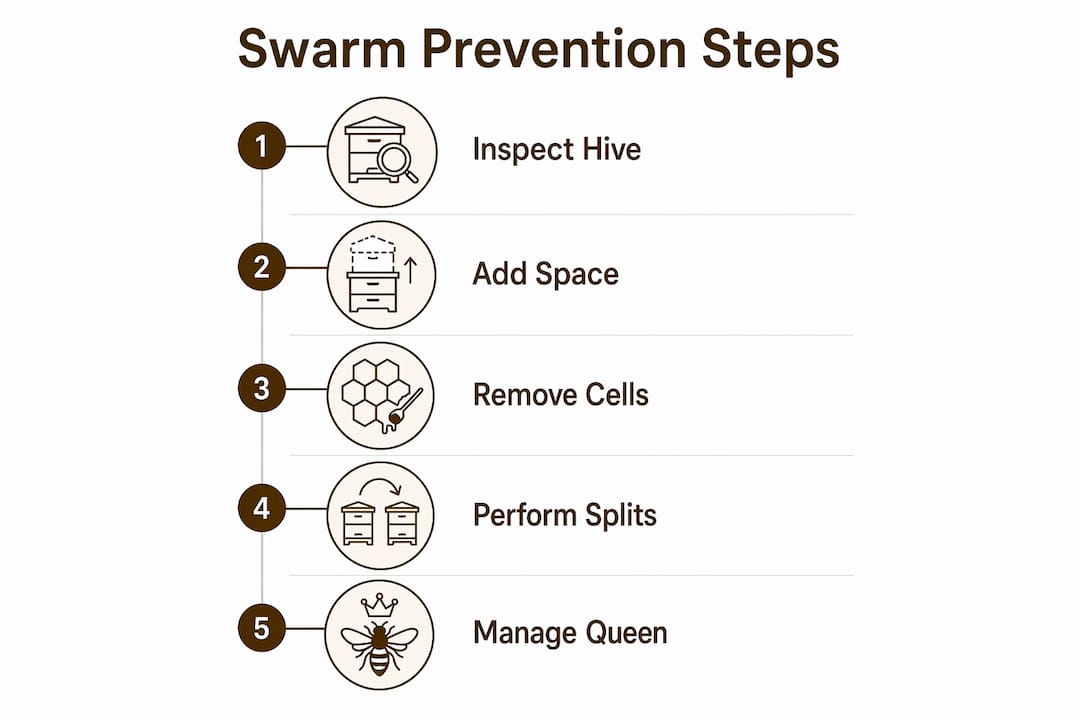
Inspect every 7–10 days during spring and early summer. This frequency is not excessive. Queen cells can progress from egg to capped in roughly eight days, so a fortnightly inspection schedule leaves a window where you can miss the critical stage entirely.
The five signs to check at every inspection:
- Queen cells. Look along the bottom edges of frames and between frames. A peanut-shaped cell hanging downward is a swarm cell. A cell built in the middle of a frame is more likely an emergency cell, which signals a different problem.
- Congestion in the brood box. If every frame is covered with bees and there is little open space, the colony is telling you it needs room.
- Bearding. A large cluster of bees hanging on the outside of the hive in warm weather can indicate overcrowding or heat stress inside.
- Reduced queen activity. If you struggle to find the queen or notice a drop in the laying pattern, she may have slimmed down in preparation for flight.
- Increased drone population. A surge in drone numbers often precedes swarming, as drones are needed to mate with the new queen.
Removing swarm cells alone is insufficient. Colonies in swarm mode will rebuild cells quickly, and the underlying cause, usually congestion or an ageing queen, remains unaddressed. Treat cell removal as a temporary measure while you implement a proper management response.
Pro Tip: Carry a fine-tipped artist's brush on inspections. Use it to gently move bees away from the bottom bar of each frame without rolling them, which makes spotting queen cells far easier and reduces the risk of accidentally damaging one.
How do hive splits prevent swarming?
A hive split is the most reliable bee swarm management technique available to a hobby beekeeper. It mimics the natural swarming process in a controlled way, relieving congestion and satisfying the colony's reproductive drive without losing bees over the fence.
Preparation matters before you split. You need a nucleus box (nuc) with at least five frames, a spare hive stand, and ideally a mated or virgin queen ready to introduce. Splitting without a replacement queen is possible but carries risk.
Follow these steps for a basic split:
- Locate the queen in the original hive. Move her, along with two frames of brood, two frames of honey and pollen, and the bees covering those frames, into the nuc box.
- Close the nuc and move it to a new stand at least one metre away from the original hive. Bees returning from foraging will go back to the original site, which is fine. The nuc will build its own forager force from young bees.
- Check the original hive for queen cells. Select the best-looking capped cell and destroy the rest. This gives the colony a single, known queen cell to raise.
- Leave both units undisturbed for at least two weeks to allow the new queen to emerge, mate, and begin laying.
- After two weeks, confirm laying in both units before treating them as independent colonies.
Walk-away splits without the queen often fail to prevent swarming in highly congested colonies. The original colony rebuilds population quickly and may continue swarm preparations regardless. Taking the queen with you into the nuc is the more reliable approach.
Key points to remember when splitting:
- Never split a colony that is already below five frames of bees. The resulting units will be too weak to thrive.
- Time splits for late spring when colonies are strong and nectar is available.
- Label the nuc with the split date so you can track queen development accurately.
- Relocate the nu cat least three kilometres away if you want to prevent foragers from drifting back to the original site.
What role does queen management play in swarm prevention?
Queen health is the foundation of swarm prevention. An old or failing queen produces weaker pheromone signals, and the colony responds by preparing to replace her, often through swarming.
Requeening every two years maintains strong queen pheromones and significantly reduces swarming tendencies. A young, vigorous queen keeps the colony cohesive and focused on production rather than reproduction. Many experienced hobby beekeepers requeen annually in high-productivity hives.
Practical queen management for hobbyists:
- Mark your queen with a colour-coded paint pen using the standard five-year colour cycle (white, yellow, red, green, blue). Marked queens are far easier to find during inspections.
- Record the queen's hatch year in your hive notes. Without a record, it is easy to lose track of her age across a busy season.
- When requeening, introduce the new queen in a cage with a candy plug and allow the colony three to five days to accept her before releasing her directly.
- Avoid creating queenless conditions for more than a few days. A queenless colony will raise emergency cells from any available young larvae, and the resulting queen may be of poor quality.
A colony with a strong, young queen is also more likely to accept swarm prevention interventions like splits and space additions without reverting to swarm behaviour. Queen management and space management work together. Neither alone is sufficient.
Key takeaways
Effective swarm prevention requires combining regular inspections, timely space additions, controlled splits, and consistent queen management rather than relying on any single technique.
| Point | Details |
|---|---|
| Add space early | Introduce a super or brood box at 70–80% capacity to stop congestion before it starts. |
| Inspect every 7–10 days | Spring inspections at this frequency catch queen cells before they become unmanageable. |
| Split proactively | Moving the queen into a nuc relieves congestion and satisfies the colony's reproductive drive. |
| Requeen every two years | A young queen produces stronger pheromones, keeping the colony stable and less prone to swarming. |
| Use swarm traps as backup | Swarm traps baited with lemongrass oil and old brood comb catch swarms that escape prevention efforts. |
What I have learned after years of swarm season
Swarm prevention is genuinely a multi-layered strategy, and the beekeepers who treat it as a single action, say, just removing queen cells, are the ones who lose colonies every spring. I learned this the hard way in my third season, when I pulled cells from a congested hive three weeks running and still watched half the bees leave on a Tuesday afternoon.
The shift that made the biggest difference for me was treating swarm traps as a normal part of the apiary setup rather than an admission of failure. Swarm traps as backup are not a sign that your prevention has failed. They are the sensible acknowledgement that bees are biological systems, not machines. I keep two traps baited with lemongrass oil within fifty metres of my hives from april through july, and they have caught swarms I never saw coming.
The other thing I would tell any hobby beekeeper is to build a swarm kit and keep it ready. Mine contains a spare nuc box, five drawn frames, a queen cage, a marking pen, and a small bottle of lemongrass oil. When you spot a swarm in progress, you have minutes, not hours. Having the kit assembled means you act rather than scramble.
Realistic expectations matter too. Even with excellent management, a determined colony will sometimes swarm. The goal is not a perfect record. The goal is to reduce frequency, catch most events early, and recover quickly when one slips through.
— steve
How Beekeeperscolony supports your hive management
Managing swarm prevention across multiple hives gets complicated fast. Inspection dates, queen ages, split records, and space additions all need tracking if you want to stay ahead of the season.
Beekeeperscolony brings apiary planning, hive tracking, pest records, and expert resources together in one place. The platform lets you log inspection notes, track queen introduction dates, and access tailored advice for your local conditions. Whether you are managing one hive or ten, having a clear record of each colony's history makes swarm prevention decisions faster and more confident. Visit Beekeeperscolony to see how the platform supports hobby beekeepers through every stage of the season.
FAQ
What triggers swarming in honey bees?
Swarming is triggered primarily by overcrowding in the brood box, an ageing queen with weakening pheromones, and strong nectar flows that accelerate population growth. Addressing all three factors together gives the best protection against swarms.
How often should I inspect my hive during swarm season?
Inspect every 7–10 days during spring and early summer. This frequency ensures you catch queen cells before they are capped and still have time to intervene effectively.
Can I stop a swarm by removing queen cells?
Removing queen cells alone rarely stops a determined colony from swarming. The underlying cause, usually congestion or an old queen, must be addressed at the same time through splits or space additions.
When is the best time to split a hive?
Split hives in late spring when colonies are strong, nectar is available, and daytime temperatures are consistently warm enough for a new queen to make her mating flights successfully.
How does requeening help with swarm prevention?
A young queen produces stronger pheromones that suppress the colony's urge to swarm. Requeening every two years maintains this pheromone strength and keeps the colony focused on production rather than reproduction.